The STAR Method for Behavioral Interviews: Turn Your Experience Into a Persuasive Story
When the interviewer says "Tell me about a time you resolved a conflict," don't ramble. Use the STAR method to break your experience into Situation, Task, Action, and Result, so every answer has structure, numbers, and impact.
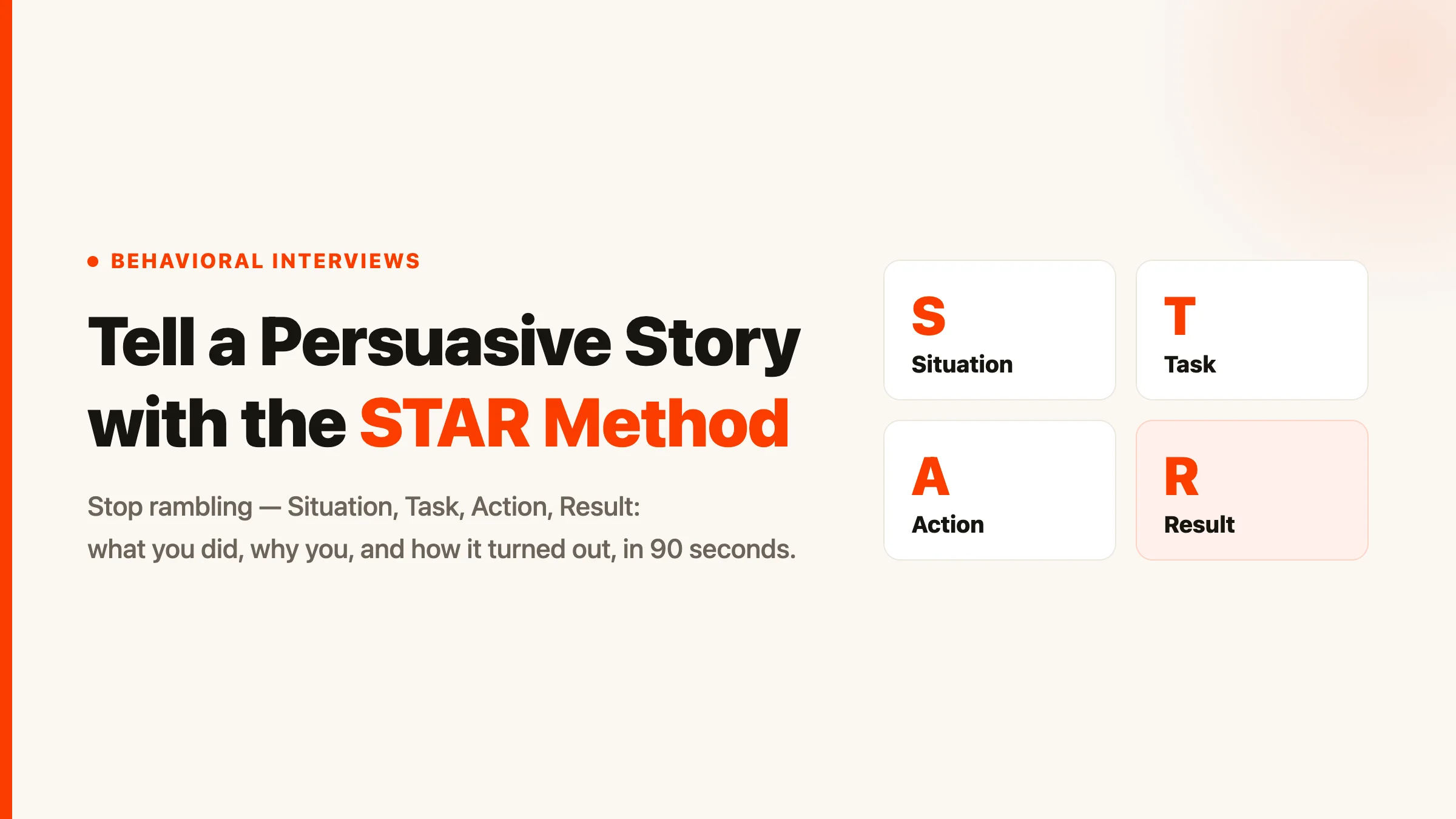
"Tell me about a time you faced a challenge and overcame it." Behavioral questions like this show up in nearly every interview, yet many people slip into a rambling play-by-play the moment they open their mouths—three minutes of background, the key actions glossed over in a single line, and a vague ending. The STAR method exists to cure exactly this: break an experience into four parts so the interviewer can hear, within 90 seconds, what you did, why it had to be you, and how it turned out.
What STAR Stands For
STAR is an acronym for the four parts of answering a behavioral question:
| Letter | Meaning | What you need to make clear |
|---|---|---|
| Situation | Situation | The background—one or two sentences is plenty |
| Task | Task | The specific goal you had to solve / your responsibility |
| Action | Action | The specific steps you took (the core—half your airtime) |
| Result | Result | A quantified outcome, ideally with numbers |
The key ratio: S and T together should take no more than a quarter, A takes half, and R takes the remaining quarter. The mistake almost everyone makes is dragging out S and leaving A vague.
A Bad Example vs. a Good One
Bad (rambling):
The project was super tight at the time, everyone was busy, communication wasn't great, then I helped coordinate a bit, and in the end we shipped on time.
After hearing this, the interviewer has no idea what you actually did.
Good (STAR):
(S) In Q3 last year, we had to ship a payments refactor in two weeks, but the front-end and back-end kept clashing on interface fields. (T) As the back-end lead, I had to resolve the interface disagreements without slipping the deadline. (A) I first compiled the 12 disputed fields into a comparison table, then ran a 30-minute alignment meeting with both sides to lock each one down. After that I froze the contract with OpenAPI and added CI validation, so any interface change that wasn't approved would fail the build. (R) Integration time dropped from an estimated 5 days to 2, we shipped on time, and there were zero interface-related bugs after launch.
Same event—but the second version makes the interviewer remember your three concrete actions ("comparison table + frozen contract + CI validation") and a set of numbers.
Three Techniques to Make STAR Hit Harder
1. Use "I" in the action, not "we"
The interviewer is assessing your individual contribution. Use "we" for the team context, but in the Action part be sure to switch back to "I did... I decided..."—otherwise your credit gets diluted into the collective.
2. Quantify the result whenever possible
"Efficiency improved" is weak; "integration went from 5 days to 2" is strong. When you don't have a ready-made number, a relative one works too: a percentage, a multiple, time saved, or fewer tickets.
3. Build a "story bank"
Don't count on improvising. Ahead of time, organize your past experiences into 6–8 STAR stories that cover these high-frequency dimensions:
- Resolving conflict / cross-team collaboration
- Delivering under pressure or a deadline
- A failure and what you learned from it
- An improvement you drove proactively / a 0-to-1 effort
- Leading people / influencing others
- Your most technically challenging decision
A good story can often be reworked to answer several questions—the same "payments refactor" experience can answer both "your most challenging project" and "how you resolve disagreements."
Use Mock Interviews to Smooth Out Your Stories
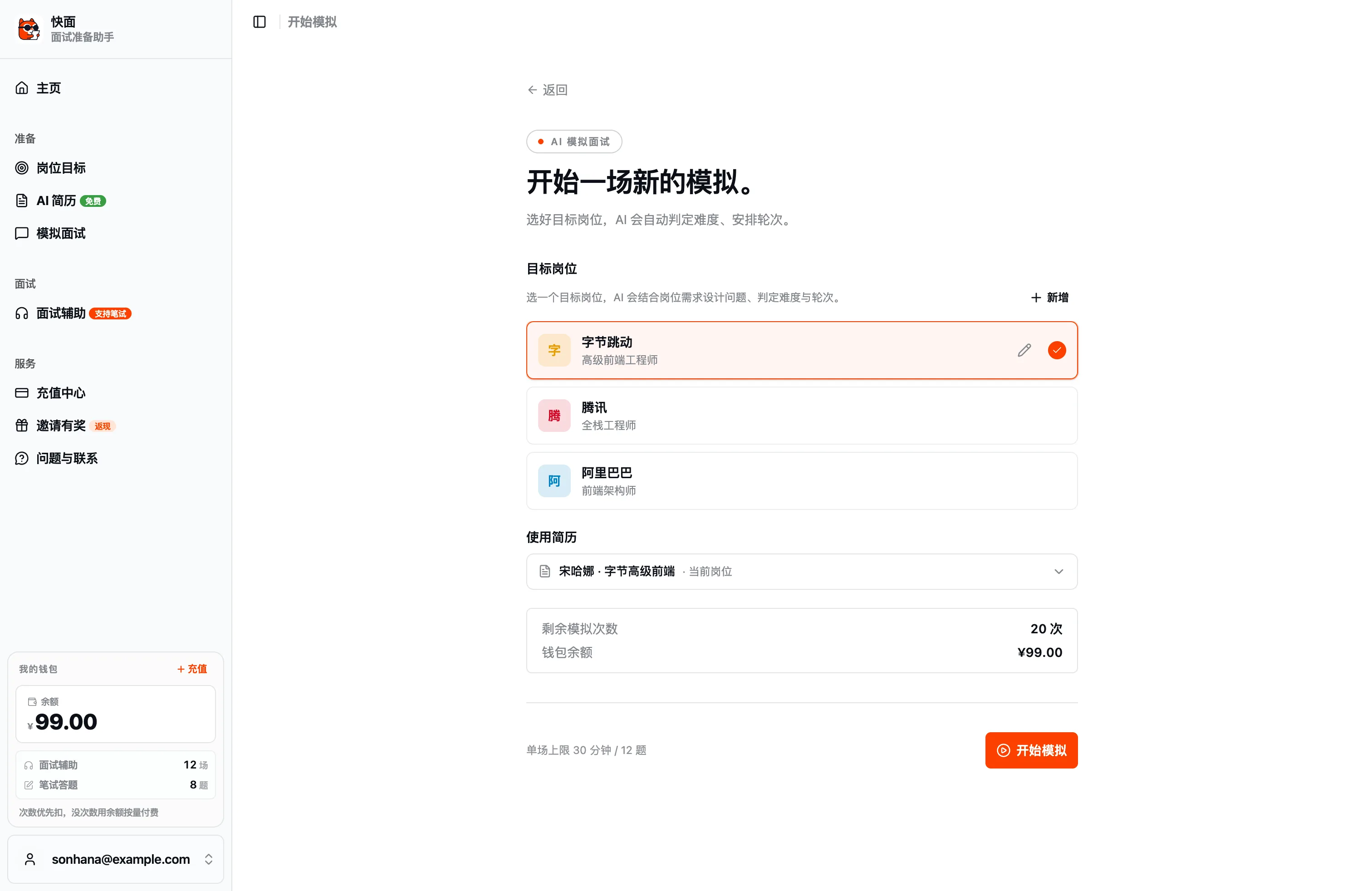
Writing it on paper and saying it out loud are two different things. Take your polished STAR stories into Kuaimian's AI Mock Interview and run them for real—the AI will probe like a real interviewer, asking "how exactly did you build that comparison table" or "why were you the one to lead it," forcing you to firm up the fuzzy parts. Practice until you can deliver without notes, stay under 90 seconds, and have the numbers roll off your tongue—then these stories become your arsenal in the real interview.
Turning your experience into a story isn't about packaging—it's about letting the interviewer truly see your value.
Ready?
For your next interview, use Kuaimian
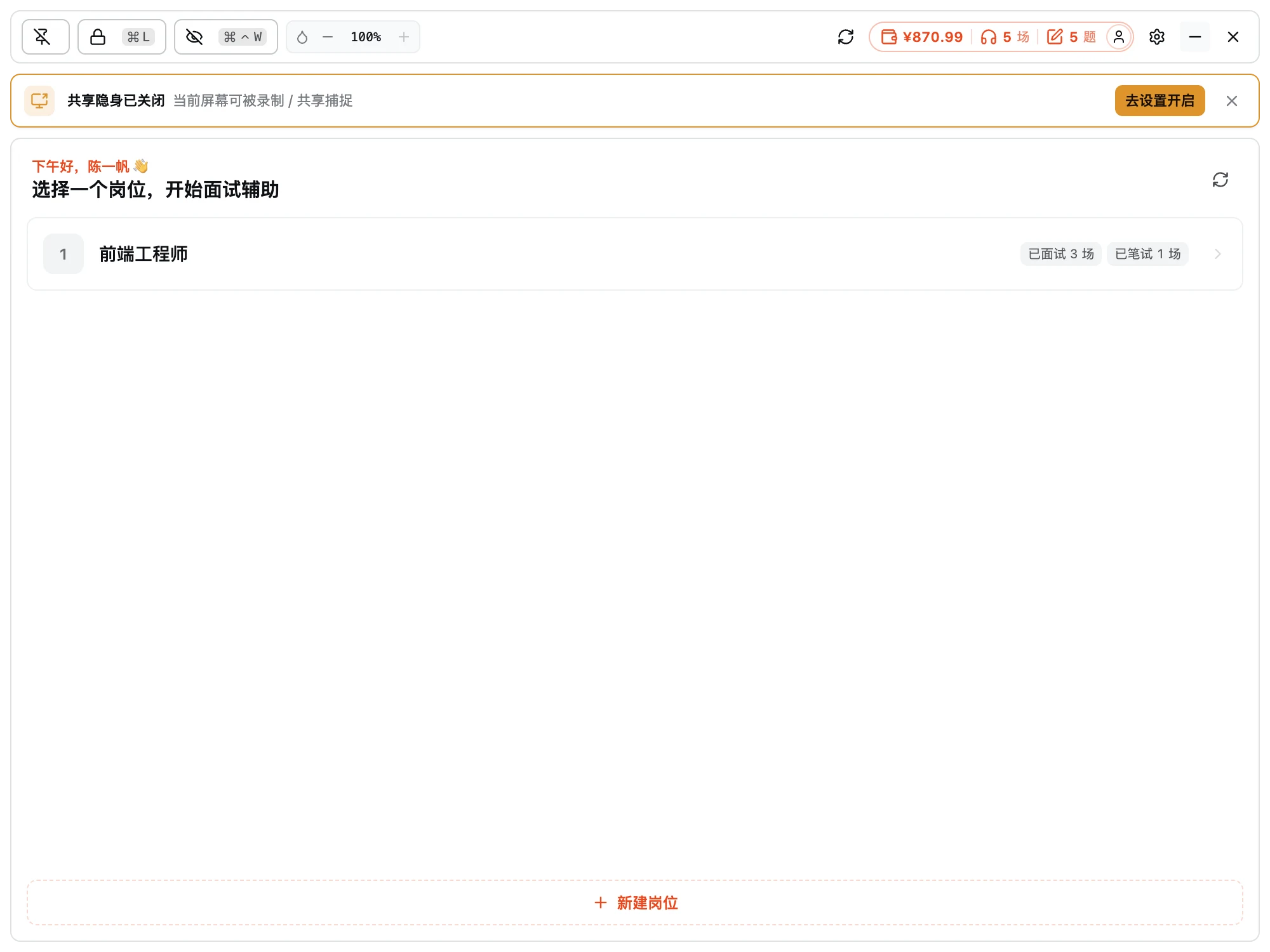
Start free: try resume optimization and mock interviews to get a feel for how the AI responds, then decide whether to top up on interview assistance.